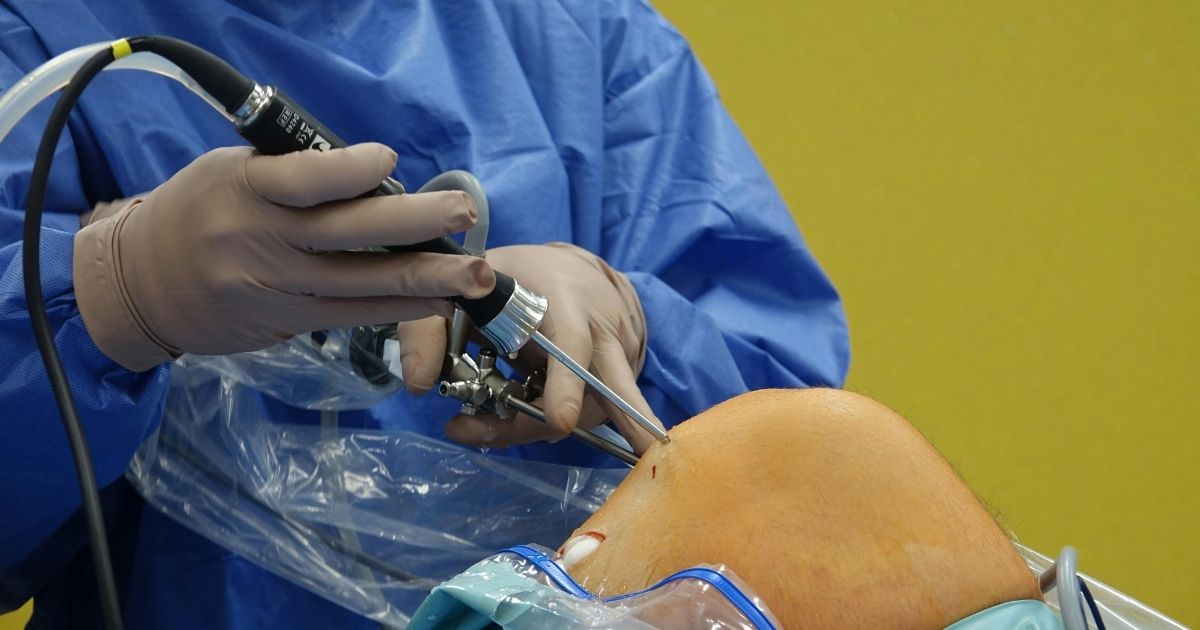
Anterior cruciate ligament (ACL) tears are among the most common injuries in orthopedics, traditionally managed with reconstruction using autograft or allograft tissue. While effective, reconstruction replaces the native ligament rather than restoring it. The Bridge-Enhanced ACL Repair (BEAR) implant introduces a different approach—one focused on healing the patient’s own ligament.
What Is the BEAR Implant?
The BEAR implant is a bioengineered, absorbable scaffold placed between the torn ends of the ACL during surgery. Combined with the patient’s own blood, it creates an environment that supports ligament healing. Unlike traditional ACL reconstruction, which relies on graft tissue, the BEAR technique aims to preserve native anatomy and potentially restore more natural biomechanics.
How Does It Compare to Reconstruction?
Early clinical studies suggest that outcomes with the BEAR implant may be comparable to standard ACL reconstruction in selected patients. A randomized controlled trial by Murray et al. (2020) demonstrated similar patient-reported outcomes and knee stability between BEAR and hamstring autograft reconstruction at two-year follow-up.
Additionally, some data suggest improved preservation of hamstring strength with BEAR, since no graft harvest is required. This may have implications for rehabilitation and return-to-sport performance.
Patient Selection Is Key
Not all ACL tears are suitable for BEAR. The procedure is typically indicated for patients with acute injuries (generally within a few weeks) and sufficient remaining ligament tissue. Chronic tears or poor tissue quality may limit its effectiveness.
As with many emerging techniques, careful patient selection is critical to achieving optimal outcomes.
Potential Advantages, and Remaining Questions
The BEAR implant offers several potential benefits:
- Preservation of native ligament tissue
- Avoidance of graft harvest morbidity
- Potential for more natural knee biomechanics
However, questions remain. Long-term durability, retear rates, and outcomes in high-demand athletes are still being studied. As with other innovations in orthopedics, widespread adoption will depend on continued evidence from larger and longer-term studies.
Conclusion
While early results are encouraging, it should be viewed as a complementary option rather than a replacement for traditional reconstruction—at least for now.
For clinicians and medical students, the key takeaway is clear: the future of ACL treatment may not just be reconstruction, but restoration.
Selected References
- Murray MM, Flutie BM, Kalish LA, et al. The Bridge-Enhanced ACL Repair (BEAR) procedure: two-year outcomes of a randomized controlled trial. Am J Sports Med. 2020.
- Murray MM, Fleming BC. Use of a bioactive scaffold to stimulate ACL healing. J Orthop Res. 2013.
- Proffen BL, Sieker JT, Murray MM. Bio-enhanced ACL repair: a review. Clin Sports Med. 2015.
- American Academy of Orthopaedic Surgeons (AAOS). Management of ACL Injuries Clinical Practice Guidelines.